
By Easy Peasy · Published · 7 min read
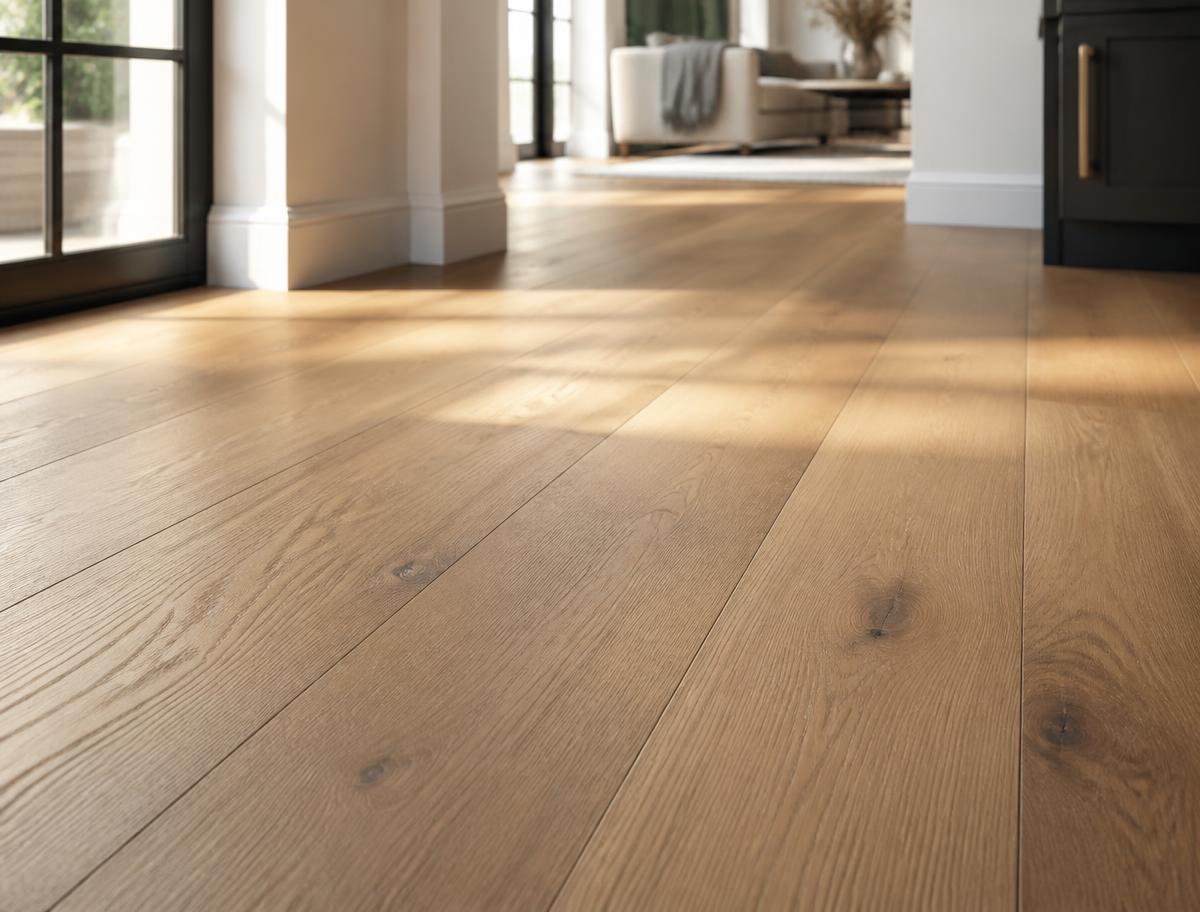
Match the material to the room
There is no single best flooring for a home — there is a best flooring for each room. Entryways, kitchens, and bathrooms see water. Bedrooms see bare feet. Living rooms see furniture and traffic. Choosing per zone, with consistent color and plank direction, gives you durability without a patchwork look.
Hardwood
Solid hardwood can be refinished multiple times, which makes it the longest-horizon option. It is sensitive to moisture and humidity swings, so it belongs above grade in climate-controlled spaces.
Engineered wood
Engineered wood gives you a real wood wear layer over a dimensionally stable core. It handles humidity better than solid hardwood and is often the right call for wide planks and larger open floors.
Luxury vinyl plank
LVP is highly water-resistant, quiet underfoot, and forgiving with pets and kids. Quality varies significantly by wear-layer thickness, which is the specification worth asking about before you compare prices.
Tile
Tile is the most durable and water-tolerant option and the right choice for bathrooms, mudrooms, and laundry rooms. It is harder underfoot and colder in winter unless you add radiant heat during installation — a decision that has to be made before the floor goes down.
The subfloor decides the outcome
Whichever material you choose, an unlevel or unsound subfloor will show through as flex, squeaks, or failed seams. Preparation is not an upsell; it is the reason a floor stays flat.